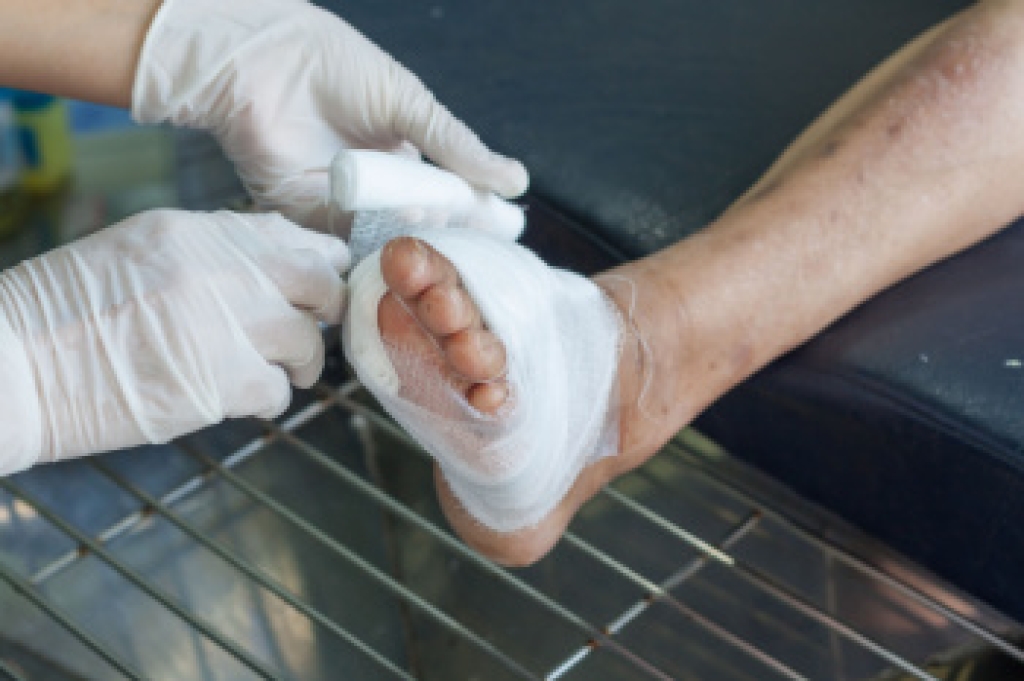
Circulation Exercises for the Feet While at Work

Sitting or standing for long hours at work can slow blood flow in the feet, leading to stiffness, swelling, and discomfort by the end of the day. Limited movement allows fluid to collect in the lower limbs, especially around the ankles and toes, and may increase fatigue daily. Simple workplace exercises can encourage circulation without disrupting daily tasks. Ankle circles, gentle calf raises while standing, and seated toe lifts activate muscles that assist blood flow back toward the heart. Brief walking breaks during the workday help keep joints flexible. A podiatrist can evaluate foot posture, walking patterns, and work-related demands to identify factors that contribute to circulation problems. Treatment may include exercise guidance, footwear recommendations, and strategies to reduce strain during prolonged sitting. If you have foot stiffness, swelling or pain at work, it is suggested that you make an appointment with a podiatrist for an exam, diagnosis, and treatment.

Exercising your feet regularly with the proper foot wear is a great way to prevent injuries and build strength. If you have any concerns about your feet, contact Jordan Baker, DPM from Best Foot Forward Surgical Podiatry. Our doctor can provide the care you need to keep you pain-free and on your feet.

Exercise for Your Feet

Exercise for your feet can help you gain strength, mobility and flexibility in your feet. They say that strengthening your feet can be just as rewarding as strengthening another part of the body. Your feet are very important, and we often forget about them in our daily tasks. But it is because of our feet that are we able to get going and do what we need to. For those of us fortunate enough to not have any foot problems, it is an important gesture to take care of them to ensure good health in the long run.

Some foot health exercises can include ankle pumps, tip-toeing, toe rises, lifting off the floor doing reps and sets, and flexing the toes. It is best to speak with Our doctor to determine an appropriate regimen for your needs. Everyone’s needs and bodies are different, and the activities required to maintain strength in the feet vary from individual to individual. 

Once you get into a routine of doing regular exercise, you may notice a difference in your feet and how strong they may become.

If you have any questions, please feel free to contact our office located in Florence, SC . We offer the newest diagnostic and treatment technologies for all your foot care needs.

Read more about Exercise for Your Feet

Clearing Up Stubborn Toenail Fungus

Toenail fungus often begins quietly, showing up as a small change in color or texture before spreading deeper into the nail. Over time, the nail can become thick, brittle, and difficult to trim, and shoes may feel uncomfortable because of pressure on the affected area. Warm, moist environments encourage fungal growth, which is why people who wear closed shoes for long hours or visit communal spaces like gyms and pool areas are more at risk. Although over-the-counter products can be tempting, established fungal infections rarely clear without professional care. A podiatrist can confirm the diagnosis, thin the nail if needed, and recommend targeted treatments that reach the source of the problem more effectively. Addressing the issue early can prevent pain, nail deformity, and spread to other toes. If you notice persistent discoloration, thickening, or crumbling of a toenail, it is suggested that you see a podiatrist for a proper diagnosis and appropriate treatment.

If left untreated, toenail fungus may spread to other toenails, skin, or even fingernails. If you suspect you have toenail fungus it is important to seek treatment right away. For more information about treatment, contact Jordan Baker, DPM of Best Foot Forward Surgical Podiatry. Our doctor can provide the care you need to keep you pain-free and on your feet.

Symptoms

  • Warped or oddly shaped nails
  • Yellowish nails
  • Loose/separated nail
  • Buildup of bits and pieces of nail fragments under the nail
  • Brittle, broken, thickened nail

Treatment

If self-care strategies and over-the-counter medications does not help your fungus, your podiatrist may give you a prescription drug instead. Even if you find relief from your toenail fungus symptoms, you may experience a repeat infection in the future.

Prevention

In order to prevent getting toenail fungus in the future, you should always make sure to wash your feet with soap and water. After washing, it is important to dry your feet thoroughly especially in between the toes. When trimming your toenails, be sure to trim straight across instead of in a rounded shape. It is crucial not to cover up discolored nails with nail polish because that will prevent your nail from being able to “breathe”.

In some cases, surgical procedure may be needed to remove the toenail fungus. Consult with your podiatrist about the best treatment options for your case of toenail fungus.  

If you have any questions please contact our office located in Florence, SC . We offer the newest diagnostic and treatment technologies for all your foot and ankle needs.

Read more about Treating Toenail Fungus

Sever's Disease and Podiatric Care

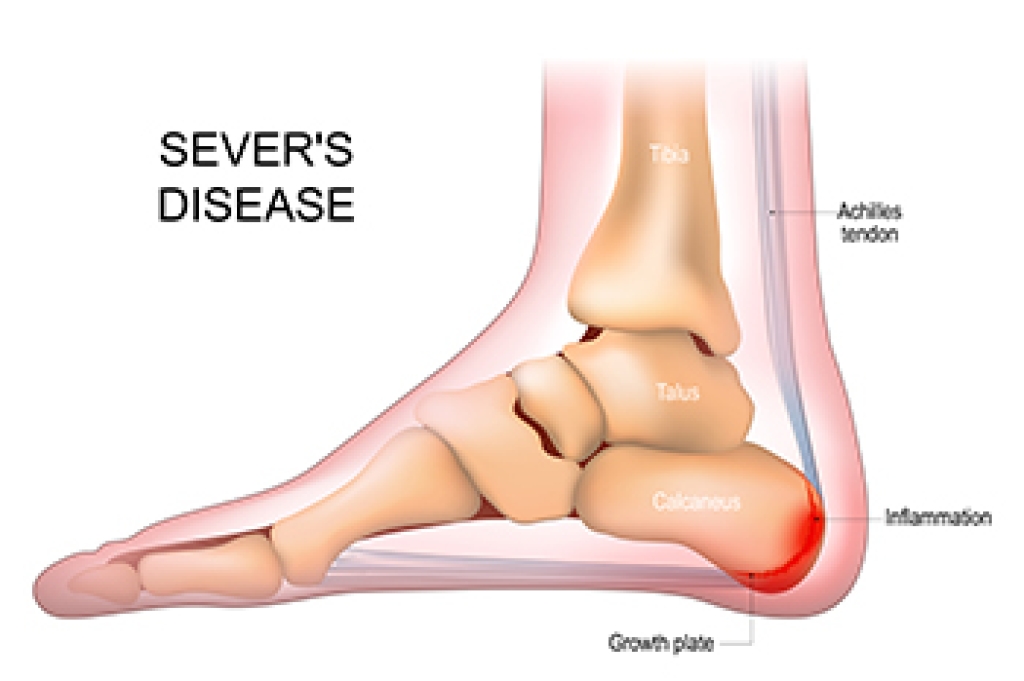
Sever's disease is a common cause of heel pain in children, named after JW Sever who first described the condition in 1912. It occurs when the growth plate in the heel becomes inflamed due to overuse of the bones and tendons in the foot, often from running, jumping, or other high impact sports. Children with Sever's disease may experience pain at the back or bottom of the heel, limping, stiffness, and difficulty participating in physical activities. The condition is typically seen in active children during growth spurts. A podiatrist can evaluate the severity, recommend stretching and strengthening exercises, provide supportive footwear or orthotics, and guide activity modification. If your child has heel pain or is limping, it is suggested that you schedule a visit with a podiatrist who can offer effective relief and management tips for Sever’s disease.

Sever's disease often occurs in children and teens. If your child is experiencing foot or ankle pain, see Jordan Baker, DPM from Best Foot Forward Surgical Podiatry. Our doctor can treat your child’s foot and ankle needs.

Sever’s Disease

Sever’s disease is also known as calcaneal apophysitis, which is a medical condition that causes heel pain I none or both feet. The disease is known to affect children between the ages of 8 and 14.

Sever’s disease occurs when part of the child’s heel known as the growth plate (calcaneal epiphysis) is attached to the Achilles tendon. This area can suffer injury when the muscles and tendons of the growing foot do not keep pace with bone growth. Therefore, the constant pain which one experiences at the back of the heel will make the child unable to put any weight on the heel. The child is then forced to walk on their toes.

Symptoms

Acute pain – Pain associated with Sever’s disease is usually felt in the heel when the child engages in physical activity such as walking, jumping and or running.

Highly active – Children who are very active are among the most susceptible in experiencing Sever’s disease, because of the stress and tension placed on their feet.

If you have any questions, please feel free to contact our office located in Florence, SC . We offer the newest diagnostic and treatment technologies for all your foot care needs.
Read more about Sever's Disease

Do Your Child's Feet Hurt?

Have your child's feet been examined lately? Healthy feet are happy feet. If your child is complaining of foot pain, it may be a sign of underlying problems.

Poor Foot Circulation and How to Protect Your Feet

Poor foot circulation occurs when blood flow to the feet is reduced, limiting oxygen and nutrient delivery to tissues. This condition can affect foot health by slowing wound healing, increasing the risk of infection, and causing muscle weakness or tissue damage. Common symptoms include cold feet, numbness, tingling, swelling, and cramping during activity. Risk factors include diabetes, peripheral artery disease, obesity, smoking, high blood pressure, and a sedentary lifestyle. Early recognition and management are essential to prevent complications. A podiatrist can assess circulation, evaluate underlying causes, recommend lifestyle modifications, provide specialized footwear, and monitor foot health to prevent ulcers or infections. If you have poor foot circulation, it is suggested that you are under the care of a podiatrist who can help you manage this condition.

While poor circulation itself isn’t a condition; it is a symptom of another underlying health condition you may have. If you have any concerns with poor circulation in your feet contact Jordan Baker, DPM of Best Foot Forward Surgical Podiatry. Our doctor will treat your foot and ankle needs.

Poor Circulation in the Feet

Peripheral artery disease (PAD) can potentially lead to poor circulation in the lower extremities. PAD is a condition that causes the blood vessels and arteries to narrow. In a linked condition called atherosclerosis, the arteries stiffen up due to a buildup of plaque in the arteries and blood vessels. These two conditions can cause a decrease in the amount of blood that flows to your extremities, therefore resulting in pain.

Symptoms

Some of the most common symptoms of poor circulation are:

  • Numbness
  • Tingling
  • Throbbing or stinging pain in limbs
  • Pain
  • Muscle Cramps

Treatment for poor circulation often depends on the underlying condition that causes it. Methods for treatment may include insulin for diabetes, special exercise programs, surgery for varicose veins, or compression socks for swollen legs.

As always, see a podiatrist as he or she will assist in finding a regimen that suits you. A podiatrist can also prescribe you any needed medication. 

If you have any questions, please feel free to contact our office located in Florence, SC . We offer the newest diagnostic and treatment technologies for all your foot care needs.
Read more about Causes Symptoms and Treatment for Poor Circulation in the Feet

Connect With Us

scroll to top